


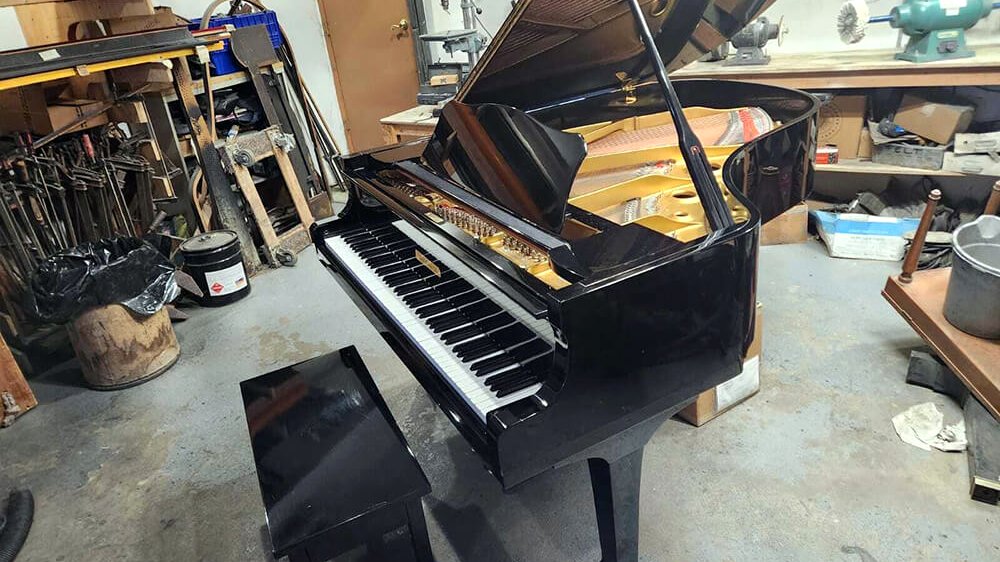
30 Oct What Piano Restoration in Westchester Can and Cannot Fix
What Piano Restoration in Westchester Can and Cannot Fix
When an older piano starts sounding off, most people assume it just needs a tuning. Sometimes that is true. Other times, the issues you hear and feel point to deeper wear that tuning alone cannot fix. Knowing the difference can save you time, money, and frustration.
We see this a lot in Westchester. As the weather cools and people spend more time inside, pianos that have been quiet all summer suddenly get played again. Sticky keys, weak tone, and rattling pedals show up. This is where understanding what piano restoration services in Westchester can and cannot do becomes very helpful.
Routine care, like tuning and small adjustments, keeps a healthy piano in shape. Restoration and rebuilding are different. They address the structure, mechanics, and look of an instrument that has aged, dried out, or been played hard for many years. Our goal here is to explain what skilled work can bring back to life, what it cannot change, and how to decide what your own piano needs.
What Skilled Restoration Can Bring Back to Life
Good restoration can make a tired piano feel remarkably alive again. Under the lid, there are hundreds of moving parts that affect how the instrument plays and sounds. When these parts are worn, you feel it in your fingers and hear it in every note.
Some of the most effective repairs include:
- Replacing worn hammers, shanks, and action parts so notes respond evenly
- Restringing and pinblock work to help the piano hold tuning better
- Soundboard repairs that recover power, color, and sustain
- Rebuilding pedals and trapwork so the soft and sustain pedals feel clean and quiet
Once the structure is stable, we focus on tone, touch, and appearance. Careful regulation can change how the keys feel under your hands. A well-regulated action gives you:
- Even touch weight from bass to treble
- Predictable response when you play softly or loudly
- Better control for expressive playing
On the outside, cabinet work and refinishing can do a lot. Deep scratches, water rings from houseplants, fading from sunlight, and chipped corners can often be repaired or replaced. Matching new keytops and black sharps gives older instruments a fresh, clean look and a smoother feel for your fingers.
Restoration usually makes the most sense on high-quality grand pianos and certain uprights with strong original designs. These instruments often respond very well to rebuilding. A shop that understands local climate, including Westchester winters and indoor heating, will also plan the work so the piano stays stable as humidity rises and falls through the year.
Limits of Restoration and What Even Experts Cannot Change
There is a lot we can fix, but some things are baked into the instrument and cannot be changed by any rebuilder. Every piano is born with a certain design. That design sets the basic voice and power of the instrument for its lifetime.
Here are some limits that are important to understand:
- Scale design and rim construction define the basic tone and projection
- A small spinet or budget console will never behave like a high-end grand
- Action designs have built-in speed and power limits that rebuilding cannot fully reset
In other words, restoration can bring out the best version of what a piano was designed to be. It cannot turn it into a completely different level of instrument.
Some damage can be technically repairable, but not wise to pursue. Examples include:
- A broken plate or cast-iron frame
- A rim that is badly cracked or warped
- A soundboard with heavy structural failure instead of small, normal cracks
- Long-term humidity neglect leading to loose tuning pins, delamination, or mold problems
In those situations, the cost and effort needed to put the piano right may not match the musical results you could expect later.
There is also a balance between historical accuracy and modern expectations. Keeping every original part may sound charming, but older parts can limit tuning stability, speed, or reliability. Some owners prefer to keep original finishes or hardware, even if small age marks remain. Others want their piano to look nearly new. A good rebuilder will be honest about what can be refreshed and what signs of age may remain.
Choosing Between Restoration and Replacement
Deciding whether to restore your piano or replace it with another instrument is a personal choice. It is not just about the piano; it is about you and how you play.
It helps to think about:
- Emotional value: Is this a family heirloom?
- Musical potential: Can this piano, at its best, meet your needs?
- Playing habits: How often do you play and what styles?
- Future use: Will children, students, or serious players be using it in the next 10 to 20 years?
You also want to look at the broader picture of long-term ownership. Full rebuilding, partial restoration, and choosing a different piano each follow different paths. A careful comparison often shows that a well rebuilt quality instrument can be a stronger long-term partner than a brand new but very basic model.
There is a unique benefit in working with a shop that both sells and rebuilds pianos. When you can compare rebuilt instruments, new pianos, and your own piano side by side, the choice becomes clearer. A shop that does both can look at your current instrument, show you similar models that have already been rebuilt, and talk through what is practical for your situation without pushing one single answer.
How to Vet Piano Restoration Services in Westchester
If you decide to explore restoration, choosing the right shop matters. True rebuilding is hands-on work. The quality comes from the people, the parts, and the process.
Signs that a shop is prepared for real restoration work include:
- An in-house rebuilding area with visible tools, parts, and projects in progress
- Technicians who can explain soundboard work, pinblocks, action rebuilding, and refinishing in clear, simple language
- Finished pianos you can see and hear that show different levels of work
Before you commit to a large project, it is fair to ask direct questions:
- What will be replaced, and why?
- What will be repaired and kept, and why?
- What parts will stay original?
- Are there photos or recordings of past restorations, especially from homes and schools in Westchester?
Because of our Northeast climate, it is also important to talk about humidity control and follow-up. A rebuilt piano is still made of wood and felt. It needs care. Ask how the shop plans to support the instrument after the work, including seasonal visits and any recommended humidity systems for your space. Working with a nearby Westchester-area shop can make follow-up service more practical and more timely.
Taking the Guesswork Out of Your Piano’s Future
The best way to stop guessing about your piano is to have it professionally evaluated. A thorough assessment usually includes playing the piano, checking the action, looking at the soundboard, pinblock, strings, and bridges, and examining the cabinet. From there, you can get a clear picture of what is worn, what is sound, and what your options look like.
At Ford Piano, we rebuild, restore, and sell pianos under one roof here in New York. That means we can look at your current instrument, show you examples of finished rebuilds, and talk through honest options. Bring photos, serial numbers, or questions, and we will help you understand what piano restoration services in Westchester can do for your piano, where the limits are, and which path fits your music and your home.
What Our Shop Can Rebuild

Ford Piano rebuilds grands and quality uprights in our Yorktown Heights shop: pinblock, soundboard, strings, action and finish. Not every piano is a rebuild candidate, so we look at the make, the condition, and the agraffes and posts before we quote. Steinway, Mason & Hamlin and Knabe are the strongest candidates, and Baldwin, Chickering, Weber, Hardman and George Steck also made many rebuildable pianos. If you are not sure about yours, describe it on our Is My Piano Worth Rebuilding? form.
Related guides
- Restoration vs. Refinishing: What Each Process Includes (Westchester Cases)
- Understanding Professional Piano Restoration Services
- Sentimental vs. Market Value in Westchester: Appraise a Family Piano
Get Started With Your Project Today
If you are ready to hear your instrument at its best again, our team at Ford Piano is here to help. Explore our specialized piano restoration services in Westchester to see how we can bring your piano back to life with careful craftsmanship and attention to detail. Have questions or want to discuss your specific piano? Simply contact us and we will walk you through the next steps.
Frequently Asked Questions
What can piano restoration fix?
Piano restoration can repair or replace worn action parts, hammers, strings, tuning pins, pedals, keytops, and damaged cabinet finishes. It can also improve touch, tuning stability, tone, sustain, and the piano's overall appearance when the underlying structure is sound.
What is the difference between piano tuning and piano restoration?
Piano tuning adjusts string tension so the notes are in tune with one another. Restoration addresses deeper age-related problems, such as worn mechanical parts, unstable tuning pins, damaged strings, pedal issues, and finish damage.
Can an old piano be restored to sound like a new grand piano?
Restoration can help an older piano perform at its best, but it cannot change its original scale design, rim construction, or basic level of power. A small spinet or budget console can be improved significantly, but it will not become equivalent to a high-quality grand piano.
How do I know if my piano needs restoration instead of a tuning?
Your piano may need restoration if it has sticky or uneven keys, weak tone, rattling pedals, broken parts, or difficulty holding a tuning. A piano technician can inspect the action, strings, pinblock, soundboard, and structure to determine whether tuning, repair, or rebuilding makes the most sense.
Is piano restoration worth it for an old piano in Westchester?
Restoration is often worthwhile for high-quality grand pianos and well-built uprights with a strong original design. It may not be a practical investment if the piano has a broken plate, severely warped rim, major soundboard failure, mold damage, or extensive humidity-related structural problems.
No Comments